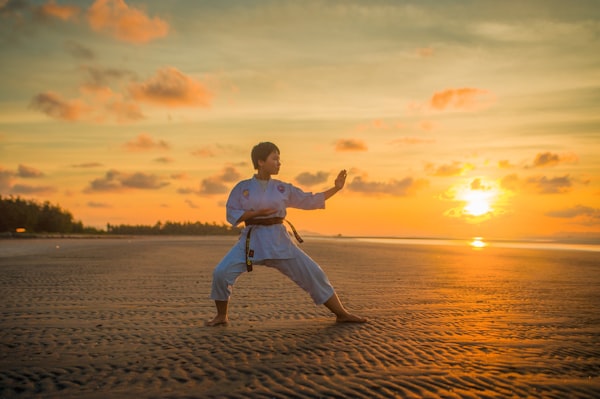
When Jigoro Kano founded Judo in 1882, he wasn't just looking to create an effective combat method by removing the most dangerous techniques from traditional Ju-jitsu. He wanted to build a complete educational system, forging both body and mind.
Whether you are a beginner or an advanced practitioner, returning to the basics is essential. Here are the 5 pillars that support the entire structure of modern Judo.
01. Seiryoku Zenyo
Maximum Efficiency
Often translated as "maximum efficiency for minimum effort", this principle is the technical keystone of Judo. It is not about being weak, but about using one's strength intelligently. If an opponent pushes you, do not push back: pull them. Use their own energy against them. It is the art of physical non-resistance to achieve technical victory.
02. Jita Kyoei
Mutual Welfare and Benefit
Judo is not practiced alone. Without a partner (Uke), there is no progress possible for the one executing the technique (Tori). This social principle reminds us that we cannot grow by crushing others, but by rising together. In the dojo, respect for the partner's physical integrity is absolute.
03. Kuzushi
Unbalancing
Before any throw, there is unbalancing. It is the most important phase and often the most neglected by beginners. Trying to throw a stable opponent is fighting against brute force. *Kuzushi* consists of breaking the opponent's posture to put them in a weak position where they can no longer defend themselves effectively.
- Happo-no-Kuzushi: The 8 fundamental directions of unbalancing.
- Action/Reaction: Provoking a reaction in the opponent to create an opening.
04. Ukemi
The Art of Falling
"Seven times down, eight times up." Before learning to throw, the judoka learns to fall. Knowing how to fall without injury (Ukemi) is what allows one to practice Judo for a lifetime. It is also a lesson in humility and resilience: accepting the fall to better get back up and resume the fight.
05. Rei
Respect and Etiquette
"Judo begins and ends with a bow." The dojo is a sacred place where etiquette (Reishiki) structures the practice. The bow is not submission, but a mark of respect towards the place, the teacher, and the partner. It marks the transition from daily life to the martial mindset.
In Summary
Mastering these 5 principles takes a lifetime. Do not focus solely on victory in competition (Shiai), but on the application of these concepts in your daily practice and life.
Find a club near meSHARE THIS ARTICLE